
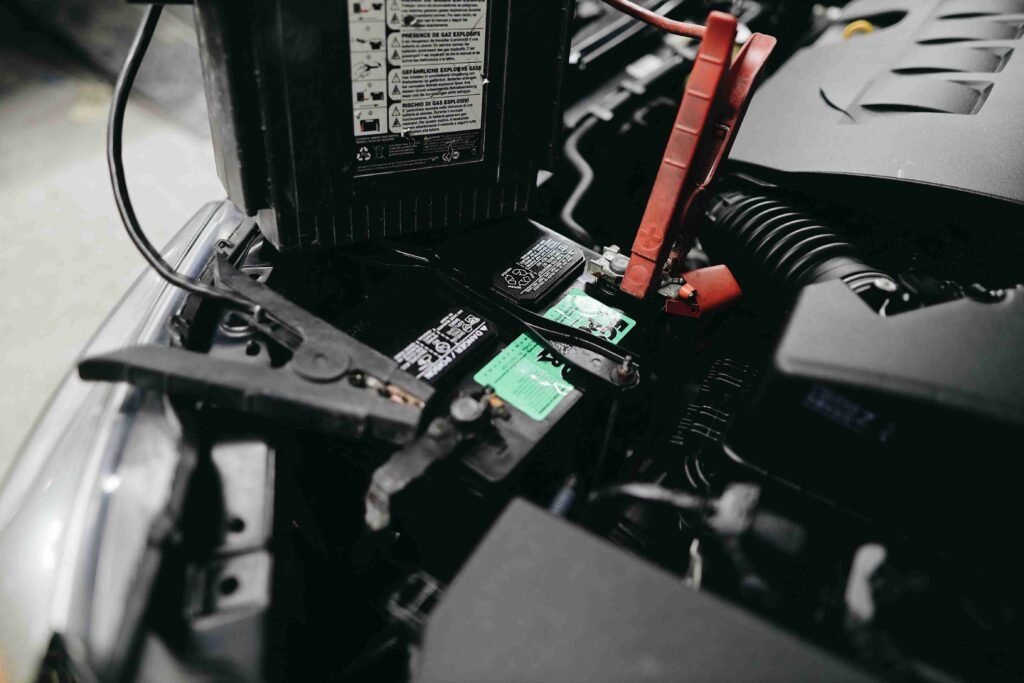
Your car won’t start, a neighbor pulls up with jumper cables, and you’re thinking — great, problem solved. But wait. Your buddy at work mentioned something about a bad alternator last week, and now you’re wondering if jumping the car will even work, or if you’ll make things worse. It’s a fair question, and the answer is a little more nuanced than a simple yes or no.
What Is a Bad Alternator?
Before we get into jumping the car, it helps to understand what the alternator actually does. Think of it as the car’s built-in charger. While the engine runs, the alternator generates electricity and keeps the battery topped off. It also powers everything from your headlights to your phone charger.
When the alternator starts failing, it stops doing its job. The battery drains down because nothing is recharging it, and eventually the car either won’t start or it dies while you’re driving. A lot of people confuse this with a plain old dead battery, and that mix-up can send you down the wrong repair path.
Signs your alternator is failing
A few things point toward a failing alternator rather than just a dead battery. You might notice the dashboard battery light flickering or staying on. Your headlights may dim at idle and brighten when you rev the engine. Electronics like the radio or power windows might act sluggish. You could also hear a whining or grinding noise coming from the engine bay, which often means the alternator bearings are going bad.
If your battery keeps dying even after you replace it with a brand-new one, that’s another strong sign the alternator is the real culprit.
Bad alternator vs. dead battery: what’s the difference?
A dead battery just needs a charge. A bad alternator means the car can’t recharge itself. With a dead battery, you jump the car and it often runs fine because the alternator takes over. With a bad alternator, the battery runs the whole show — and it only has so much juice before things go dark again.
Can You Jump-Start a Car with a Bad Alternator?
Yes, you can jump a car with a bad alternator — but it’s not a fix, and you need to go in with realistic expectations.
The jump start gives the battery enough charge to get the engine running. Once the car starts, it can keep going for a short time by drawing down whatever charge the battery still holds. But here’s the thing: without a working alternator, the battery doesn’t get any of that charge back. Every electrical system running in the car — the ignition, the fuel pump, the lights — keeps pulling from that same depleted reserve.
Will the car stay running after the jump?
It depends on how much life the battery still has and how many electrical loads the car is running. Under the best conditions, you might get 15 to 30 minutes of drive time. Some people squeeze out a bit more, others get less. Turn off everything you don’t need — air conditioning, the radio, extra lights — to stretch that window as far as possible.
Do not count on making it across town if the battery is already weak. The car can stall at a red light, on the highway, or at the worst possible moment. Plan for the shortest possible drive and go straight to a mechanic or auto parts store.
Risks of jump-starting with a failing alternator
Jump-starting itself is generally safe, as long as you connect the cables correctly. The bigger risk comes from what happens after. If the car stalls in traffic, that creates a safety hazard for you and other drivers. Modern vehicles also have sensitive electronics, and running them off a dying battery that’s fluctuating in voltage can sometimes cause issues with sensors or the engine control module.
Another thing worth knowing: if the alternator is more than just weak, if it’s completely dead, the car may not even hold the jump long enough to start. In that case, you need a tow, not a jump.
What to Do After the Jump: Fixing the Alternator
A jump start buys you time, but the alternator still needs attention. Here’s how to handle it.
If the car starts, drive directly to an auto parts store. Most places like AutoZone, O’Reilly, or Advance Auto Parts will test your alternator and battery for free, right there in the parking lot. The test takes about five minutes and tells you exactly what’s going on. If the alternator is confirmed bad, you have a couple of options.
You can replace it yourself if you’re comfortable with basic car work. Alternators aren’t the most complicated part to swap out, and plenty of online tutorials walk you through it for most makes and models. A remanufactured alternator from an auto parts store typically runs between $100 and $200, plus a core charge you get back when you return the old one.
If you’d rather have a shop handle it, expect to pay somewhere between $300 and $500 for parts and labor, depending on your car and your location. It’s not a cheap fix, but it’s a lot better than getting stranded repeatedly or burning through new batteries every few months trying to work around a broken alternator.
The bottom line? Jump-starting with a bad alternator works as a short-term move to get you somewhere safe. It won’t fix the problem, and the car will let you down again if you don’t take care of the alternator. Use the jump to get to help, not to put off dealing with it.