
Why a Parked Car Should Never Vibrate
Most drivers notice it right away. You pull into a parking spot, leave the engine running, and the whole car starts shaking. It feels wrong because it is wrong. A properly functioning car should sit quietly at idle with nothing more than a gentle hum from the engine bay.
That vibration is your car telling you something. Ignoring it rarely makes the problem disappear. In most cases, the shaking gets worse over time and the repair bill grows along with it.
What Normal Idle Feels Like
A healthy engine idles at around 600 to 800 RPM in park. At that speed, you might feel a very faint, steady vibration through the steering wheel or seat. That is completely normal. What is not normal is a rough, uneven shake that rattles the mirrors, vibrates the dashboard, or makes the entire cabin feel unstable.
When Vibration Becomes a Warning Sign
The moment shaking feels irregular or violent, or arrives with strange sounds or smells, you have a mechanical problem that needs attention. Some causes are minor and inexpensive. Others signal serious engine or transmission trouble that can leave you stranded. Identifying the source quickly helps you make smart repair decisions before the problem escalates.
Common Reasons Your Car Shakes When Parked
Several mechanical problems can cause a parked car to shake. Some involve the engine, some involve the fuel system, and others involve how the engine connects to the rest of the vehicle.
Engine Misfires
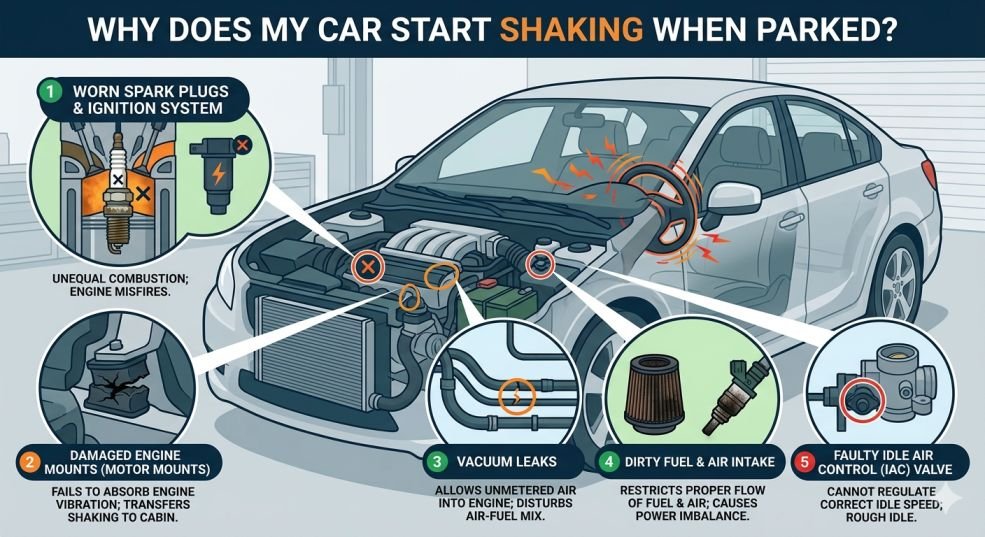
An engine misfire happens when one or more cylinders fail to ignite fuel properly. Each cylinder fires in a specific sequence, and when one skips, the engine loses its balance and shakes. You might also notice the check engine light turning on, reduced acceleration, or a popping sound from the exhaust. The National Institute for Automotive Service Excellence identifies engine misfires as one of the leading causes of rough idle and vibration at rest.
Worn or Damaged Motor Mounts
Motor mounts hold the engine in place and absorb vibration during operation. A healthy motor mount keeps that energy contained. A worn or broken one transfers vibration directly into the car body. Drivers with damaged motor mounts often feel a clunking sensation when shifting from park to drive, alongside persistent shaking while parked.
Dirty or Failing Spark Plugs
Spark plugs ignite the air and fuel mixture inside each cylinder. A worn or carbon coated plug produces a weak or inconsistent spark, causing the engine to run unevenly. That unevenness shows up as a noticeable shake at idle. Most manufacturers recommend replacing spark plugs every 30,000 to 100,000 miles depending on plug type and vehicle specifications.
Clogged Fuel Injectors
Fuel injectors spray a precise mist of fuel into each cylinder at the right moment. Over time, carbon deposits disrupt that spray pattern. A clogged injector delivers too little fuel to its cylinder, throws off engine balance, and produces a rough shaky idle that drivers feel most when sitting in park.
Vacuum Leaks
Engines rely on a network of vacuum hoses to manage airflow and fuel delivery. When a hose cracks or disconnects, uncontrolled outside air enters the engine and disrupts the air to fuel ratio. Vacuum leaks often produce a hissing sound alongside the shaking and frequently trigger the check engine light.
Faulty Idle Air Control Valve
The idle air control valve regulates airflow when the engine idles. When this valve gets dirty or fails, the engine struggles to hold consistent RPMs. Drivers often notice the RPM needle bouncing up and down on the gauge while the car shakes erratically at a stop.
Transmission Issues
A worn torque converter, low transmission fluid, or internal transmission damage can all produce vibration throughout the vehicle while parked. Transmission related shaking feels deeper and more pronounced than engine shaking. It often comes alongside slipping gears, delayed shifting, or a burning smell from underneath the car.
How to Diagnose the Shaking Problem
Getting the diagnosis right saves you from paying for repairs that do not fix the actual problem.
Signs You Can Spot Yourself
Before visiting a mechanic, pay attention to the details. Does the shaking start immediately or only after the engine warms up? Does it worsen when you turn on the air conditioning? Does the RPM needle move unevenly? These observations help narrow down the cause and give your mechanic a solid starting point.
What a Mechanic Looks For During Inspection
A mechanic starts with a visual inspection of the engine bay, looking for cracked vacuum hoses, damaged motor mounts, and fluid leaks. They also check spark plug condition, fuel injector performance, and idle air control valve behavior. Most shops charge between $50 and $150 for this diagnostic inspection, and many apply that fee toward the repair cost if you proceed with the work.
Diagnostic Tools and OBD II Codes
Every car built after 1996 carries an OBD II onboard diagnostic system. When something fails, the system stores a fault code a mechanic reads with a scan tool. Codes like P0300 through P0308 identify specific cylinder misfires. Code P0505 points to idle control system problems. These codes guide the diagnosis in the right direction and reduce costly guesswork considerably.

Repair Costs for Each Common Cause
Costs vary depending on your location, vehicle, and chosen shop. The figures below reflect average national costs in the United States based on current industry data.
Engine Misfire Repair Cost
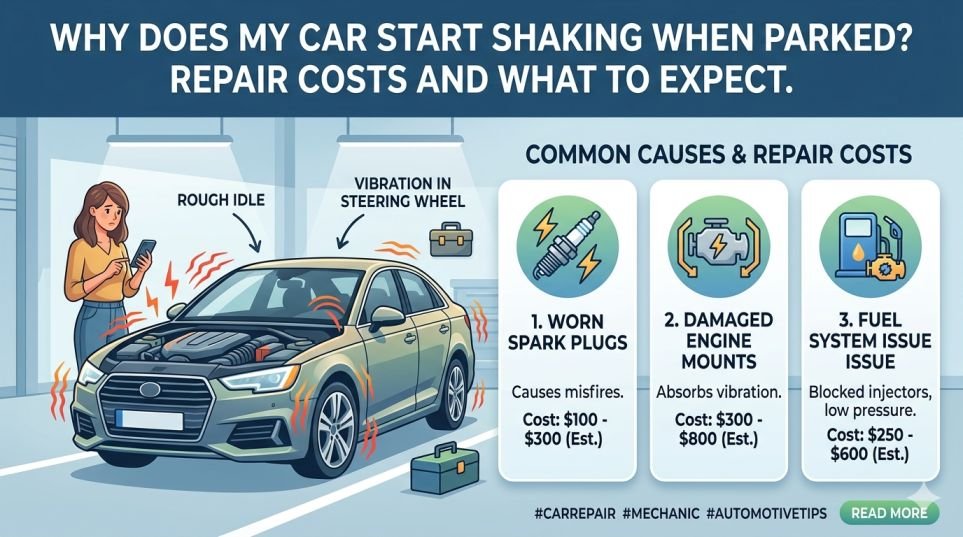
If spark plugs cause the misfire, expect to pay between $100 and $300 for a full set replacement including labor. A faulty ignition coil costs between $150 and $400 per coil. More complex misfire causes involving fuel delivery or compression problems can push the total beyond $500 depending on what the mechanic finds during diagnosis.
Motor Mount Replacement Cost
Motor mount replacement costs between $200 and $600 per mount including parts and labor. Most vehicles carry two to four mounts. If multiple mounts fail together, the total cost rises accordingly. Catching this problem early prevents additional damage to surrounding drivetrain components and keeps repair costs lower overall.
Spark Plug Replacement Cost
Standard spark plug replacement costs between $100 and $250 for most vehicles. Cars with larger engines or hard to reach plugs cost more due to additional labor time. Iridium and platinum plugs cost more upfront but last significantly longer than standard copper plugs. Replacing all plugs at the same time rather than just the faulty one is the smarter and more cost effective approach.
Fuel Injector Cleaning or Replacement Cost
Professional injector cleaning costs between $50 and $150 and often resolves the problem when the clog is not severe. Full injector replacement ranges from $150 to $400 per injector including labor. A complete replacement job on a four cylinder engine can run between $600 and $1,600 depending on the vehicle and local labor rates.
Vacuum Leak Repair Cost
A cracked hose costs under $20 for the part, plus $50 to $150 in labor at most shops. If the leak comes from an intake manifold gasket, the repair becomes more involved. Intake manifold gasket replacement typically costs between $400 and $900 depending on engine complexity and accessibility.
Idle Air Control Valve Replacement Cost
Replacing this valve costs between $120 and $500 depending on the vehicle. The part ranges from $30 to $300, and labor adds another $50 to $150. Before full replacement, a mechanic may clean the valve with throttle body cleaner, which sometimes restores function at a much lower cost than buying a new part.
Transmission Service or Repair Cost
A basic transmission fluid flush costs between $100 and $250. Torque converter replacement runs between $500 and $1,000. A full transmission rebuild can cost anywhere from $1,500 to $4,000 or more. Always get an accurate diagnosis before authorizing major transmission work given how quickly costs escalate with this type of repair.
Factors That Affect the Total Repair Bill
Two drivers with the same shaking problem can end up paying very different amounts. Several variables determine the final cost.
Your Car Make, Model and Age
Luxury and European vehicles cost more to repair than domestic or Japanese models due to parts availability and specialized labor requirements. Older cars sometimes cost more because quality parts are harder to source. Newer vehicles still under manufacturer warranty may qualify for coverage that reduces or eliminates your out of pocket expense entirely.
Labor Rates in Your Area
Mechanics in major cities like New York or Los Angeles charge between $150 and $200 per hour. Shops in smaller cities and rural areas typically charge between $75 and $120 per hour for the same work. That difference adds up fast on jobs requiring multiple hours of skilled labor to complete.
Dealership vs. Independent Mechanic
Dealerships charge more but employ factory trained technicians who know your specific vehicle well. Independent mechanics charge less and perform the same repairs with quality aftermarket parts. For routine repairs like spark plugs or motor mounts, an independent shop offers strong value. For complex transmission or engine control issues, a dealership sometimes delivers more accurate diagnosis and faster resolution.
Can You Drive a Shaking Car or Should You Stop?
Low Risk Situations Where Short Term Driving May Be Okay
If the shaking feels mild and the check engine light shows a minor code like a single cylinder misfire, driving a short distance to a repair shop is generally acceptable. Dirty spark plugs and small vacuum leaks rarely cause sudden mechanical failure. Monitor your temperature gauge and oil pressure light closely while heading to a nearby service location.
High Risk Situations Where You Should Stop Right Away
Stop driving immediately if the shaking comes with a burning smell, smoke, a rising temperature gauge, or sudden loss of power. These symptoms together point to serious damage that worsens with every mile. Call a tow truck rather than risk turning a fixable problem into a complete engine or transmission failure.
How to Prevent Your Car From Shaking in the Future
Routine Maintenance That Prevents Vibration Problems
Follow your manufacturer’s maintenance schedule consistently. Regular oil changes reduce stress on engine components and motor mounts. Adding a fuel system cleaner to your gas tank periodically prevents injector buildup. Asking your mechanic to check vacuum hoses during routine oil changes catches deterioration before it becomes a costly problem.
How Often You Should Service Key Components
Replace spark plugs every 30,000 miles for standard copper plugs and every 60,000 to 100,000 miles for iridium plugs. Change transmission fluid every 30,000 to 60,000 miles based on your driving conditions. Inspect motor mounts every 60,000 to 100,000 miles or when you notice new vibration or noise patterns. Request fuel injector inspection during every major scheduled service.
When to Get a Second Opinion
Red Flags From a Mechanic You Should Watch For
Be cautious when a mechanic recommends expensive repairs without showing you the failed parts or explaining the diagnosis clearly. Pressure to approve work immediately without time to consider your options is a serious warning sign. A trustworthy mechanic explains the problem in plain language, answers your questions openly, and provides a written estimate before touching your vehicle.
How to Compare Quotes and Save Money
Get at least two written estimates for any repair over $300. Use resources like RepairPal or AutoMD to check average costs in your area before visiting any shop. Ask whether the mechanic plans to use original manufacturer parts or aftermarket alternatives. Choosing a shop with strong reviews and Automotive Service Excellence certification reduces the risk of unnecessary or substandard repairs.
Conclusion — Address the Shake Before It Costs You More
A shaking car never fixes itself. Every mile you drive with an unresolved vibration puts stress on connected components and increases the risk of a far more expensive repair later.
Most causes of shaking while parked are manageable when you catch them early. Spark plugs, vacuum leaks, and fuel injector issues cost relatively little to fix compared to the damage they cause when ignored for months.
Pay attention to the warning signs, visit a qualified mechanic, ask questions, and get everything in writing before approving any work. Acting now protects your engine, your safety, and your budget from a problem that only grows more serious with time.